Invisa-RED Before and After: What Changes, Session by Session
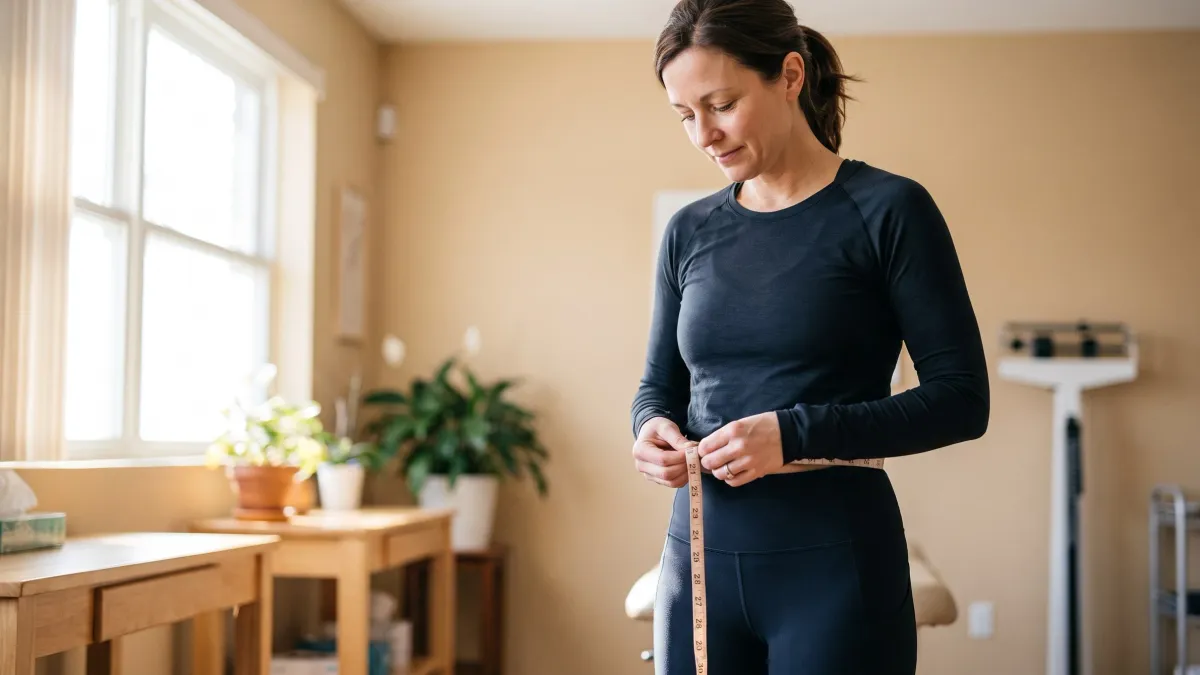
If you have searched for Invisa-RED before and after photos, you have probably seen a lot of dramatic side-by-sides. A flat stomach on the right, a fuller one on the left, and very little information about what happened in between.
We want to give you something more useful than another photo. Body Trim does not have patient before and after photos to share, so we are not going to show you any or hint that we have them. What we can do is explain what the device was actually tested for, what a realistic result looks like, and how to document your own before and after so that you can trust what you see.
What Invisa-RED is cleared to do
Invisa-RED (you will also see it written InvisaRED) is a non-invasive laser body contouring treatment that uses red and infrared light. The device we use is the invisa-RED® ELITE, made by IR Technology, LLC. Some clinics describe Invisa-RED technology as red light therapy or laser therapy. The FDA classifies it as a low-level laser for fat reduction, delivering light at two specific wavelengths of red and near-infrared light: 680 nm and 980 nm.
It is FDA-cleared, which is a different thing from FDA-approved. Clearance through the 510(k) pathway means the FDA agreed the device is substantially equivalent to devices already on the market for a specific use. The clearance number is K192275, with a decision date of August 19, 2020. You can look it up yourself in the FDA's public 510(k) database.
That specific use matters. The cleared indication is a non-invasive aesthetic treatment for the temporary reduction of the circumference of the waist, hips, and thighs. It works through photobiomodulation, meaning the light energy is meant to stimulate fat cells to release some of their stored fat (lipids).
Here is what that wording does and does not cover:
- It is about circumference, measured in inches with a tape. It is not about the number on the scale.
- The cleared treatment areas are the waist, hips, and thighs.
- It is temporary. The clearance does not describe lasting fat loss or fat removal.
Any honest conversation about Invisa-RED results starts there.
What the clearance does not cover: cellulite, loose skin, and weight loss
Search for Invisa-RED and you will find claims that it treats cellulite, tightens loose skin, boosts collagen production, helps lymphatic drainage, or works as a fat loss treatment. Some pages describe it as a way to burn fat, sculpt your body, or target stubborn fat for good, and call all of it clinically proven.
None of that is part of the FDA clearance. The device was cleared for one thing: temporary reduction of waist, hip, and thigh circumference. We do not offer Invisa-RED for cellulite, skin tightening, or skin laxity, and we do not describe it as weight loss. If a before and after photo is being used to sell any of those results, it is selling something the clearance does not cover.
What the clearance study measured
The clinical study behind the clearance was small but well designed. It was randomized, double-blind, and sham (placebo) controlled, with 40 adults (35 women and 5 men).
Some participants received real treatment. Others received a sham treatment designed to look the same without delivering the therapeutic light. Because the study was double-blind, neither the participants nor the researchers knew who was in which group.
The result: the treated group lost an estimated 6.88 inches more in combined measured circumference than the sham group. "Combined" means the waist, hip, and thigh measurements were added together. The 95% confidence interval ran from about 3.7 to 10.0 inches, and the difference was statistically significant (p < 0.001). No adverse effects were reported in the trial.
A few things are worth keeping in mind when you read that number:
- It is a total, not a single measurement. Roughly 6.9 inches spread across several measurement points is a very different picture than 6.9 inches off your waist alone.
- It is an average. Some people in a study respond more than average, some less. Individual results vary.
- It is compared with sham. That is what makes the study credible. It shows the light did something beyond the effects of simply showing up, lying still, and being measured.
- It measures inches, not pounds. The study does not show weight loss, and we do not describe Invisa-RED that way.
That is the real evidence base. It is solid enough to take seriously, and modest enough that you should be wary of anyone promising you a new body.
What before and after realistically looks like, session by session
Each Invisa-RED treatment session takes about 20 minutes. You lie down while paddles fitted with red and infrared laser diodes are positioned close to the treated areas. A raised lip keeps a small air gap, so the paddles do not touch your skin. It is non-surgical, with no needles and no recovery time, so most people go straight back to work or errands.
Invisa-RED is done over multiple sessions. The number of sessions in your series is decided at your consultation, based on your goals and the areas being treated. We do not quote a standard number in advance, because it would not mean much for your body.
Here is the honest shape of the experience.
Before your first session. This is the most important moment of the whole series, because it is your baseline. Without a good "before," there is no meaningful "after." We take measurements and, if you choose, a Styku 3D body scan.
During the first sessions. You will not feel much. Some people notice their clothes sit a little differently around the waist early on. Others notice nothing yet. Neither tells you very much on its own, which is why we rely on the tape and the scan rather than the mirror.
Through the middle of the series. This is where measurements tell the story. Change, if it comes, usually shows up first as small numbers on the tape rather than something you would spot in a photo. A half inch here and there is not dramatic to look at, but it adds up across several measurement points, the same way the study totaled waist, hips, and thighs.
After the series. We measure again under the same conditions as the baseline. This is your real before and after: two sets of numbers and two scans you can compare side by side.
Some people see a clear change on the tape. Some see a smaller one. A before and after photo may show a visible difference, or the difference may be easier to measure than to see. That is normal for a treatment that works in inches rather than pounds.
Why results are temporary, and what helps them hold
The FDA clearance describes a temporary reduction in circumference, and we think it is important to say that plainly.
The light prompts fat cells to release some of their stored lipids, but it does nothing about the habits that built those inches in the first place. If the eating and activity patterns stay the same, it is reasonable to expect the measurements to drift back over time.
Diet and exercise, sleep, and a generally healthy lifestyle are what support the result once the series ends. That is why we usually talk about Invisa-RED alongside the rest of what we do. Patients who pair it with the eating plan in our medical weight loss program are working on both sides of the equation: the treatment on the measurement, the program on the habits. We cannot promise any particular outcome from that combination, but it gives your results the best chance of holding.
On our program, that eating plan is built on lean proteins and greens in real food form. Protein targets usually run 120 to 150 grams a day, set by your provider. No shakes, no bars, no prepackaged meals. If you are curious what that looks like day to day, our post on what you actually eat on a medical weight loss program walks through it.
How to document your own before and after properly
If you want before and after results you can trust, set them up the right way from day one. These are the same habits we use in the clinic.
Get a Styku 3D scan at the start and after the series. The Styku scan takes about 35 seconds. You stand on a turntable while harmless infrared light builds a 3D model of your body. It records circumferences at the waist, hips, thighs, and bust, plus a body-fat percentage estimate. The body-fat number is an estimate, not a diagnostic measurement. The real value is comparing your own scans over time on the same scanner. The scan is priced separately, and we quote it before you decide.
Measure at the same time of day. Your waist can change noticeably between morning and evening, depending on meals, water, and salt. Measure at the same hour every time, ideally before a large meal.
Use the same tape landmarks. Measure the waist at the navel, the hips at the widest point, and each thigh at a set distance above the knee. Write the landmarks down so every measurement uses them.
Breathe normally. Measure at the end of a relaxed exhale. Do not hold your breath or pull in your stomach.
Take photos the boring way. Same clothes, same spot, same lighting, same camera distance and height, same relaxed posture. Front, side, and back. Arms slightly away from your body. Phone propped at waist height rather than held above you.
Keep the numbers with the photos. A photo without a measurement is a story. A photo with a date and a tape measurement is evidence.
Done this way, your own Invisa-RED results will mean far more to you than anyone else's photos ever could.
Red flags in before and after photos online
Before and after photos are the most persuasive part of any body contouring marketing, and the easiest part to manipulate, often without anyone intending to. When you look at photos online, check for these:
- Lighting. Light from directly overhead deepens shadows and adds definition. Flat front lighting hides it. Different lighting between the two photos can create or erase a visible change.
- Posture. A slight slouch in the before and a straight back in the after can change the look of a waistline by more than any treatment.
- Breath. A full exhale, or a sucked-in stomach, makes a big difference. Look at the ribs and shoulders.
- Angle and distance. A camera held higher, farther away, or turned slightly makes a body look smaller. Wide-angle phone lenses distort anything close to them.
- Clothing. Waistbands that sit lower or higher in one photo, or compression garments in one and not the other, change the outline.
- Time of day. A before taken in the evening after dinner and an after taken first thing in the morning will look different with no treatment at all.
- Missing context. No dates, no measurements, no mention of how many sessions, and no word about diet or weight loss during the same period.
None of this means every before and after is misleading. It means you should give more weight to measurements and context than to the picture itself.
Reading Invisa-RED reviews with a clear eye
When you read Invisa-RED reviews, the most helpful ones share specifics. How many sessions? What was measured, and how? Was the person also losing weight on a program at the same time? Did they measure again weeks after the series ended?
A review that says "I lost inches and my jeans fit better" is encouraging, but it cannot tell you what to expect. A review with numbers, timing, and context can.
You will also find negative reviews, as you will for any aesthetic treatment. Read those closely too, and check what the person expected. If someone expected weight loss, fat loss that lasts no matter what they eat, or a dramatic change from a handful of visits, that is more than the device is cleared to deliver. A negative review is most useful when it tells you what the person expected and how they measured. Keep that in mind, and bring your questions to your consultation.
So, does Invisa-RED work?
Based on the FDA clearance study, Invisa-RED produced a meaningful, measurable reduction in combined waist, hip, and thigh circumference compared with a sham treatment. That is a real result, and it is what the device is cleared for.
It is not a weight loss treatment, it does not replace eating well, and its effect is temporary. If you go in expecting inches on a tape measure rather than a different number on the scale, and you are willing to support the result with how you eat, it can be a reasonable choice.
Is Invisa-RED safe, and is there downtime?
No adverse effects were reported in the FDA clearance trial. The treatment is non-invasive and done without surgery or downtime: no needles, no anesthesia, and the paddles sit just above the skin rather than pressing on it. You can drive yourself home and get on with your day.
That said, it is still a medical aesthetic treatment, and your health history matters. Your overall health, any conditions you manage, and any medications you take are part of the consultation conversation before anyone schedules a session.
Who is a good candidate, and who isn't
Invisa-RED tends to suit people who:
- Want measurable change in waist, hip, or thigh circumference.
- Are already close to their goal, or already working on their weight, and want help with stubborn areas.
- Are comfortable with a series of short sessions at the Flint clinic.
- Understand the results are temporary and are willing to support them with their eating habits.
It is probably not the right fit if you:
- Are hoping to lose a significant amount of weight. That is what our medical weight loss program is for.
- Expect a dramatic change from one session.
- Want a result that holds no matter what you eat afterward.
- Are pregnant or managing a medical condition you have not discussed with us. Tell us at your consultation, and the provider will help decide whether the treatment is appropriate for you.
If you are weighing the treatment more broadly, our page on non-surgical body contouring in Flint covers what non-surgical fat reduction with laser body contouring can and cannot do.
Common questions
Does Body Trim have Invisa-RED before and after photos?
No, not that we can share. Rather than borrow someone else's photos, we would prefer to measure your results directly with a tape and a Styku scan, so that your before and after is your own.
How long does each Invisa-RED session take?
About 20 minutes. There are no needles and no downtime, so most people return to their day right afterward.
How many sessions will I need?
That is decided at your consultation, based on the areas you want treated and your goals. We do not quote a standard number in advance.
Is Invisa-RED FDA-approved?
It is FDA-cleared, not FDA-approved. The invisa-RED ELITE was cleared through the 510(k) pathway (K192275, August 19, 2020) for the temporary reduction of waist, hip, and thigh circumference.
Will Invisa-RED help me lose weight?
No. It is cleared for temporary circumference reduction, measured in inches. If weight loss is your main goal, our physician-supervised program is the place to start.
How much does Invisa-RED cost?
Pricing is quoted at your consultation and depends on the number of areas and sessions. Our post on how much Invisa-RED costs explains what goes into the quote and what to ask any clinic before you pay.
Getting started in the Flint area
If you want to know what Invisa-RED could realistically do for you, the best first step is a measured baseline and an honest conversation about your goals.
At Body Trim Weight Loss Clinic, 1448 W Hill Rd in Flint (right off US-23 at the Hill Road exit), we start with a free consultation. We will talk through whether Invisa-RED makes sense for you, how it fits with the rest of your plan, and how we will measure your results. We see patients from Flint, Grand Blanc, Fenton, Burton, Swartz Creek, and Davison.
Call us at 810-600-6306 or book a free consultation online.
This article is educational and is not medical advice. Invisa-RED is FDA-cleared for the temporary reduction of waist, hip, and thigh circumference and is not a weight loss treatment. Talk with a qualified healthcare provider before beginning any body contouring treatment or weight loss program, particularly if you manage a chronic condition or take prescription medication. Individual results vary.
This article is general information from Body Trim Weight Loss Clinic and is not a substitute for advice from your own provider. Individual results vary.