Medical Weight Loss Meal Plan: A Sample Week
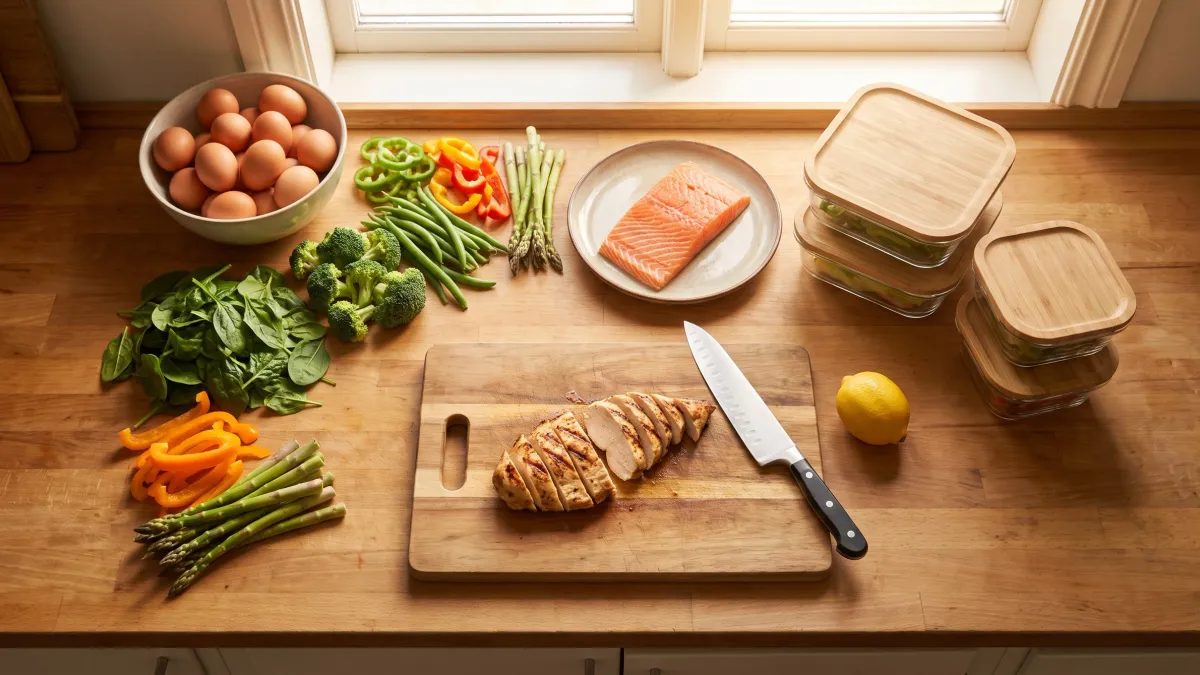
"What am I actually going to eat?" It is the question we hear more than any other, usually within the first ten minutes of a consultation. People arrive expecting a photocopied list of forbidden foods. What they really want to know is simpler: what goes on the plate on a Tuesday night after a nine hour shift.
So here is a real answer. Below is a sample medical weight loss meal plan for a full week, built the way our patients in the Flint area actually eat: lean protein and greens, real groceries, and nothing out of a wrapper. Each day shows roughly how it reaches a protein target in the 120 to 150 gram range, followed by a grocery list and a prep-ahead routine that keeps the week from falling apart by Wednesday.
One thing first. This menu is illustrative. Your provider sets your own protein target and your own meal plan based on your body, your health history and your labs. Treat this as the shape of a week, not a prescription.
Is a medical weight loss meal plan just another diet?
No, and that distinction is the whole point.
Most people searching for a medical weight loss diet plan have already done several diets. They know the pattern. You follow a set of rules for a stretch of time, you lose weight, the rules end, and the weight comes back. Then you look for the next set of rules.
We do not run a diet, because a diet is by definition something you eventually stop doing. What we build with patients is a set of lifestyle changes. It is a less exciting phrase, but it is the only version of weight management that holds. A diet has an end date. Healthy habits do not, because by the time you reach your goal weight, this is simply how you eat, and that is what helps you maintain your goal weight afterward.
Why diets usually fail
This is not a criticism of anyone who has tried one. It is a description of how most of them are built.
They rely on willpower. Willpower gets thinner across a hard week. Any plan that requires it every single day fails on your worst day, and everyone has worst days.
They are temporary by design. A thirty day challenge tells you exactly what it is in the name. Day thirty-one is the part nobody plans for, and that is where most of the weight comes back.
They ignore what your body is doing. Many things contribute to weight gain and make it hard to lose excess weight: hormones, sleep, stress, medications, thyroid function, insulin sensitivity, age, and how many times you have lost and regained before. A plan downloaded from the internet knows none of that about you.
They sell you something. If the plan depends on their shakes, their bars or their prepackaged meals, the plan ends when the purchases end.
They never teach you to cook. This is the one behind most relapses. You can follow a meal replacement plan perfectly for months and finish knowing nothing about feeding yourself. When the structure goes away, you go back to processed food, because that is the only thing you were taught to rely on. Learning to cook simple food is the core of healthy eating. It is not a side benefit of a medical weight loss program. It is the part that makes the results last.
The foundation of healthy weight loss: lean protein and greens
Every day in the sample week below follows the same simple eating plan. These are the food choices that do the most to help you lose weight while protecting muscle.
- Lean protein at every meal. Eggs, chicken, turkey, fish, shrimp, lean beef and pork tenderloin.
- Green and colorful vegetables filling the rest of the plate. Your carbohydrates come mainly from vegetables.
- No bread, pasta or oatmeal. More on that below.
- No shakes, bars or meal replacements. You will be eating groceries.
- Water throughout the day. Diet soda is discouraged, because it keeps sweet cravings alive.
That is the entire framework. The rest is portion size, timing and learning to plan meals ahead so the right food is in the fridge when you are hungry. Your provider will tell you how to handle healthy fats like olive oil, dressing and cheese, since that varies with your health needs.
Why protein comes first for successful weight loss
If you take one thing from this article, take this one.
Protein does more work than any other part of the plan. It helps preserve lean muscle while you lose fat, it keeps you full longer than the same amount of carbohydrate, and your body uses more energy digesting it.
The muscle point matters more than most people realize. Losing weight quickly without enough protein means losing muscle along with fat, and muscle is a big part of what keeps your metabolism working. Lose enough of it and keeping the weight off later becomes much harder, which is one reason rapid diets so often end in regain.
For our patients, the daily protein target usually falls between 120 and 150 grams, depending on body weight and whether you are a man or a woman. Your provider sets the exact number. A Styku 3D body scan helps here, because the scan estimates your lean mass, and lean mass matters far more for setting a protein target than the number on a bathroom scale.
Most people are surprised by how much protein that is. Patients who believed they ate plenty routinely discover they were getting less than half. In practice it means protein at every meal, not saved up for dinner.
A sample week: the daily menu
Here is the daily menu for one illustrative week of healthy foods. Protein numbers are rounded estimates based on standard nutrition values for cooked portions; brands and cuts vary, so check labels if you track. Vegetables add a few more grams each day that are not counted here.
Monday
- Breakfast: 3 eggs scrambled with a big handful of spinach, plus 1/2 cup liquid egg whites stirred in (about 31 g)
- Lunch: Small salad of mixed greens, cucumber, tomato and peppers topped with 5 oz grilled chicken breast (about 44 g)
- Snack, if needed: 2 hard-boiled eggs (about 12 g)
- Dinner: 6 oz baked cod with lemon, garlic and green beans (about 39 g)
Daily total: about 126 g of protein
Tuesday
- Breakfast: Omelet made with 1 cup liquid egg whites and 1 whole egg, filled with peppers, onions and mushrooms (about 32 g)
- Lunch: Lettuce wraps with 4 oz roasted turkey breast, cucumber, tomato and mustard (about 34 g)
- Snack, if needed: A 3 oz pouch of tuna (about 20 g)
- Dinner: 5 oz grilled sirloin with roasted Brussels sprouts and a side salad (about 40 g)
Daily total: about 126 g of protein
Wednesday
- Breakfast: 3 egg omelet with spinach and mushrooms, plus 2 oz leftover sirloin (about 34 g)
- Lunch: Chicken and vegetable soup made with low sodium or sodium free broth, celery, carrots, zucchini and 5 oz chicken breast (about 44 g)
- Snack, if needed: 2 hard-boiled eggs (about 12 g)
- Dinner: 5 oz baked salmon with roasted asparagus and a green salad (about 35 g)
Daily total: about 125 g of protein
Thursday
- Breakfast: 4 egg cups (eggs, egg whites and chopped spinach baked in a muffin tin on Sunday) (about 26 g)
- Lunch: Chicken bowl with 5 oz grilled chicken over cauliflower rice, peppers and salsa (about 44 g)
- Snack, if needed: 2 hard-boiled eggs (about 12 g)
- Dinner: Skillet of 6 oz lean ground turkey with zucchini, onions, peppers and garlic (about 44 g)
Daily total: about 126 g of protein
Friday
- Breakfast: 3 eggs plus 1/2 cup liquid egg whites scrambled with peppers and onions (about 31 g)
- Lunch: Tuna salad made with a 5 oz can of tuna, celery, mustard and a squeeze of lemon, served over greens (about 30 g)
- Snack, if needed: 3 oz sliced turkey breast rolled around cucumber spears (about 18 g)
- Dinner: Friday fish, Michigan style but baked or broiled instead of fried: 6 oz whitefish with lemon, roasted cauliflower and a side salad (about 41 g)
Daily total: about 120 g of protein
Saturday
- Breakfast: Steak and eggs: 2 eggs with a 3 oz grilled sirloin and sautéed spinach (about 36 g)
- Lunch: Out at a coney island: Greek salad with grilled chicken, dressing on the side (about 35 to 40 g, depending on the portion)
- Snack, if needed: 2 hard-boiled eggs (about 12 g)
- Dinner: 6 oz grilled shrimp skewers with grilled zucchini, peppers and onions (about 41 g)
Daily total: about 125 g of protein
Sunday
- Breakfast: 3 eggs plus 1/2 cup liquid egg whites with tomatoes and spinach (about 31 g)
- Lunch: 5 oz chicken breast meat with a big green salad (about 44 g)
- Snack, if needed: 3 oz sliced turkey breast (about 18 g)
- Dinner: 5 oz roasted pork tenderloin with green beans and mashed cauliflower (about 37 g)
Daily total: about 130 g of protein
The week at a glance
DayBreakfastLunchDinnerApproximate proteinMondayEggs and spinachGrilled chicken saladBaked cod, green beans126 g TuesdayEgg white omeletTurkey lettuce wrapsSirloin, Brussels sprouts126 gWednesdayOmelet with leftover steakChicken vegetable soupSalmon, asparagus125 gThursdayEgg cupsChicken and cauliflower rice bowlGround turkey skillet126 gFridayEgg scrambleTuna salad over greensBaked whitefish, cauliflower120 gSaturdaySteak and eggsConey island Greek saladShrimp skewers125 gSundayVeggie scramble chicken saladPork tenderloin130 g
If your target is higher
This sample week lands near the lower end of the range on purpose. If your provider sets your target closer to 150 grams, the simplest adjustment is an extra ounce or two of protein at lunch and dinner. As a rough guide, each additional ounce of cooked chicken breast adds about 8 grams. A second hard-boiled egg or an extra few slices of turkey at snack time covers the rest.
Notice what is not on this list. No meal takes an hour, no ingredient requires a special trip, and nothing comes out of a wrapper.
A simple grocery list for the week
Everything here is at a regular Flint-area grocery store. Quantities depend on your household and your target, so use this as a checklist rather than a shopping order.
Protein
- Eggs (two to three dozen) and a carton of liquid egg whites
- Boneless, skinless chicken breasts for a short week
- Roasted or sliced turkey breast
- Lean ground turkey
- Sirloin steak
- Pork tenderloin
- Cod, whitefish and salmon, fresh or frozen
- Shrimp, frozen is fine
- Canned or pouched tuna packed in water
Vegetables
- Spinach and mixed salad greens
- Broccoli, cauliflower (or bags of cauliflower rice), green beans, asparagus and Brussels sprouts
- Zucchini, bell peppers, onions, mushrooms, cucumbers, celery and tomatoes
- A few carrots for soup
Flavor without the extra calories
- Lemons, garlic, fresh or dried herbs and your favorite spices
- Mustard, salsa, hot sauce and vinegar
- Low-sodium to no sodium chicken broth
- A small bottle of olive oil or cooking spray
Most patients find their grocery spending stays flat or drops, because real food replaces convenience purchases, restaurant meals and the weight loss food products other programs require.
Prep ahead on Sunday and the week runs itself
A meal plan only works if the food is ready when you are hungry. One hour on Sunday afternoon does most of the work.
- Grill or bake a big tray of chicken breasts. Slice some for salads and bowls, keep some whole for dinners.
- Hard-boil a dozen eggs. They are the easiest high protein snack you will ever make.
- Bake a batch of egg cups. Whisk eggs and egg whites with chopped spinach and peppers, pour into a muffin tin and bake. They reheat in under a minute.
- Wash and chop vegetables. Store salad greens, peppers, cucumbers and celery ready to grab. Prepped vegetables get eaten. Whole ones often do not.
- Roast two sheet pans of vegetables. Broccoli, cauliflower and Brussels sprouts hold up well for three or four days.
- Make a pot of broth-based soup. It covers several lunches and does a lot of work in a Michigan February.
- Portion lunches into containers. A lunch you can grab in thirty seconds beats a drive-through every time.
Most patients do best when lunch is something they can assemble in five minutes. A lunch that takes effort is a lunch that gets replaced.
What about shakes, bars and medical weight loss food products?
We do not use them, and that is deliberate.
Walk into many weight loss programs and you will be sold products: protein bars, meal replacement shakes, prepackaged entrées. They are convenient, and they create a specific problem. The program works while you are buying, and it stops when you stop.
Most of these products are also heavily processed, and a plan built on them never teaches you to eat real food. When they go away, you are back where you started, except now you have learned that eating well requires a subscription. So the honest answer to "what medical weight loss food do you sell?" is that we do not sell any. You will be eating groceries.
That is also the biggest difference between a medical weight management program and a commercial plan. One sells you food. The other teaches you how to build a healthy lifestyle around the food you already buy.
What about bread, pasta and oatmeal?
These come up in nearly every consultation, usually with some anxiety attached, so here is the straight answer: they are not part of the plan.
Oatmeal surprises people most, because it has a health reputation. That reputation is not entirely undeserved in other contexts, but for the specific goal of losing fat while protecting muscle, it does not earn its place on the plate the way protein and vegetables do.
Bread and pasta are the two foods patients tell us they miss most in week one, and among the least missed by week six. Appetite adapts more than it seems it will when you are looking at the change on paper. What replaces the volume is vegetables, and more of them than most people are used to. A plate that looks empty without pasta looks full with two cups of roasted vegetables on it.
Eating out in Michigan without starting over
This is where most attempts quietly collapse, and where generic national advice helps least. Around here, food is social: the coney island after the game, the Friday fish fry, the family gathering where declining a plate is treated as a personal insult. A plan that asks you to stop showing up for that has an expiration date built in.
At a coney island. The menu is more flexible than it looks. Grilled chicken, a Greek salad with dressing on the side, eggs and vegetables at any hour. The kitchen will cook things plainly if you ask, and asking is normal.
At a fish fry. Ask whether the fish can be baked or broiled. If it cannot, eat the fish, skip the fries and bread, and fill up on a side salad.
At a family gathering. Eat something with protein before you go. Arriving hungry to a table of casseroles is a losing setup. Then take a normal plate, not an empty one, because an empty plate invites commentary you do not want to manage all evening.
In deep winter. Michigan winters are long, activity drops and comfort eating rises. That is predictable, which means it can be planned for. Soups built on broth, protein and vegetables carry a lot of weight in January and February.
At a tailgate or party. Choose your one thing deliberately, enjoy it and move on. One plate at one event does not undo a month of consistency. Deciding the week is ruined and eating accordingly until Monday is what does the damage.
How the meal plan fits your medical weight loss program
Food is the foundation, but it is not the whole weight loss program. Patients who come to us for prescription weight loss injections follow the same lean protein and greens approach, because weight loss medication works best alongside eating habits that protect muscle and can last for life. Your medical provider will review your medical history, starting weight and current weight, medications and health conditions such as type 2 diabetes or high blood pressure, and build a personalized plan and nutrition plan based on your medical history and your weight loss goals. Provider visits happen by telemedicine, so most of the program happens from home.
Progress is then measured, not guessed. A Styku scan at our Flint clinic (priced separately and quoted first) tracks inches and estimated lean mass over time, so if protein is too low or progress stalls, the plan gets adjusted based on what the numbers show.
How your eating changes as you reach a healthy weight
Progress is not linear, and any program telling you otherwise is selling something.
Early on, the focus is structure: regular meals, enough protein, steady hydration and habits that survive a bad week, not just a good one.
In the middle stretch, the work becomes troubleshooting. Weight loss slows, which is normal and expected, and adjustments come from your measurements rather than guesswork.
Later, the focus shifts to long-term weight maintenance, which is a different skill than losing it. Lasting, sustainable weight loss means being able to maintain a healthy weight without the structure, and your care plan shifts to support that. Plenty of people can lose weight. Far fewer are ever taught what comes afterward, which is why so many end up starting over. That last phase, the plateau at month four and the question of what you do when the structured part ends, is what a supervised program is really for.
Common questions
Does a medical weight loss meal plan work for both men and women?
Yes. The structure is the same; the numbers change. Men and people with more body weight or lean mass usually have protein targets toward the higher end of the 120 to 150 gram range, so portions get bigger rather than the menu changing.
Do I have to give up carbohydrates completely?
No. Your carbohydrates come mainly from vegetables on this plan. Bread, pasta and oatmeal are not included. Your provider sets the specifics based on your health history and labs.
Do I need to count calories?
It depends. Some patients do well tracking calories or keeping a food journal. Others do better with structure and portion guidance and find tracking makes them miserable. Both can work.
Can I follow this if I am vegetarian?
Hitting the protein target takes considerably more planning without meat. Raise it at your consultation so your plan is built around it from the start.
Is this the same as working with a registered dietitian?
No. This sample week shows the general approach our patients follow, not individual medical nutrition advice. Your provider sets your protein target and adjusts your plan as you go. If you have complex nutrition needs, a registered dietitian can be a helpful addition, and your provider can talk with you about that.
What if I hit a plateau?
Plateaus are normal. Bring it to your provider rather than cutting food on your own. A plateau is usually a signal to look at protein, portions, sleep or activity, and your scans help show what is really changing.
What if I have a bad week?
You will have one. Everyone does. A bad week is a data point, not a verdict, and it is worth telling us about rather than hiding, because it usually points at something worth adjusting.
Getting started in the Flint area
If you have been through several diets and are tired of starting over, the useful next step toward better health is finding out what is actually going on with your body instead of trying the next plan on faith. Your weight and health are connected, and your overall health deserves more than a guess.
At Body Trim Weight Loss Clinic in Flint, we start with a free consultation and a review of your health history. From there, your provider sets your protein target and builds a meal plan around your schedule, your health and the food you will realistically eat for the long run. We serve Flint, Grand Blanc, Fenton, Burton, Swartz Creek and Davison, right off US-23 at the Hill Road exit.
Call us at 810-600-6306 or book a free consultation.
This article is educational and is not medical advice. Nutrition needs vary considerably between individuals, and the sample meal plan above is an illustration, not a prescription. Talk with a qualified healthcare provider before starting any weight loss program or changing how you eat, particularly if you manage a chronic condition or take prescription medication. Individual results vary.
This article is general information from Body Trim Weight Loss Clinic and is not a substitute for advice from your own provider. Individual results vary.